
Overview
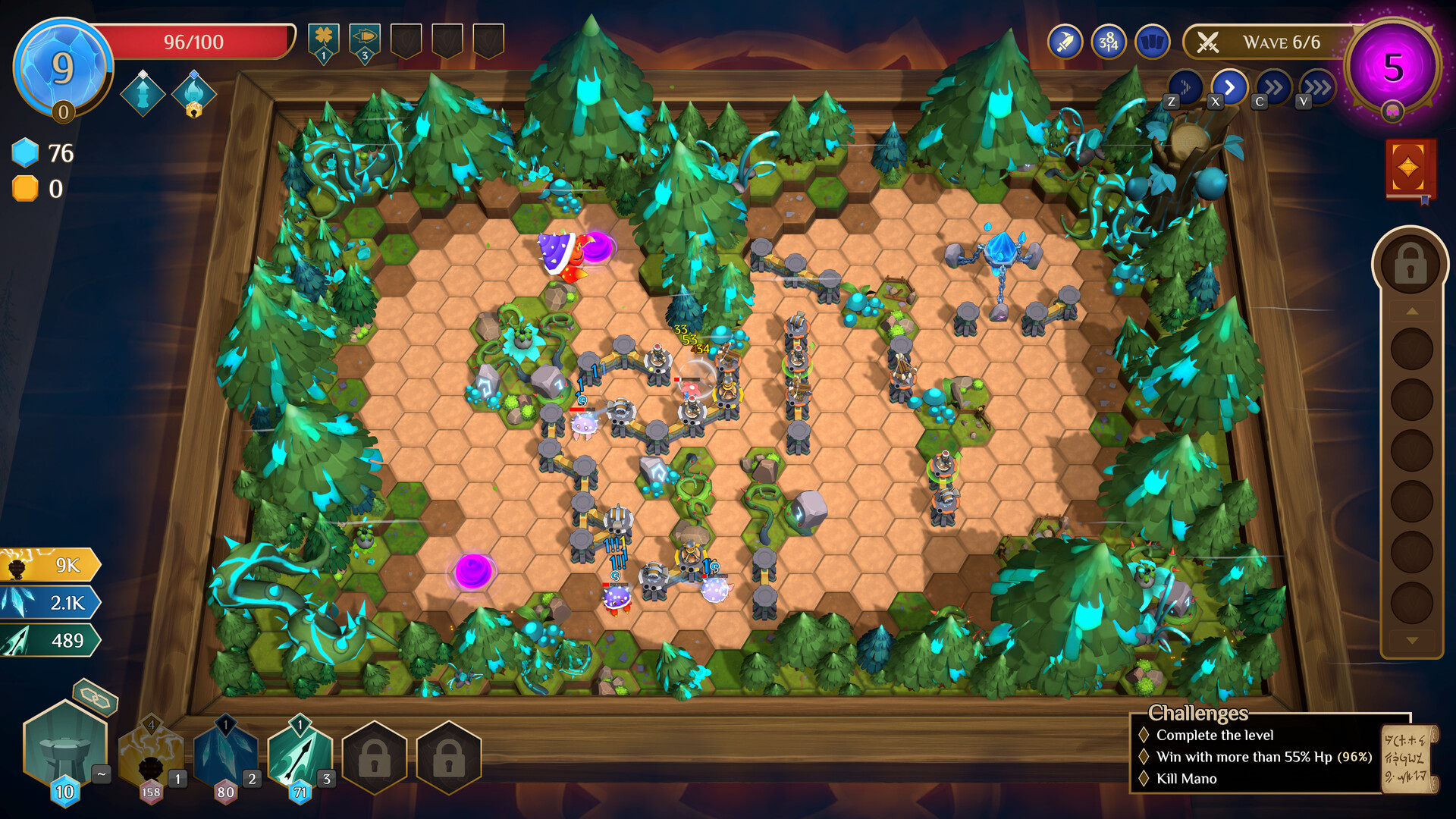
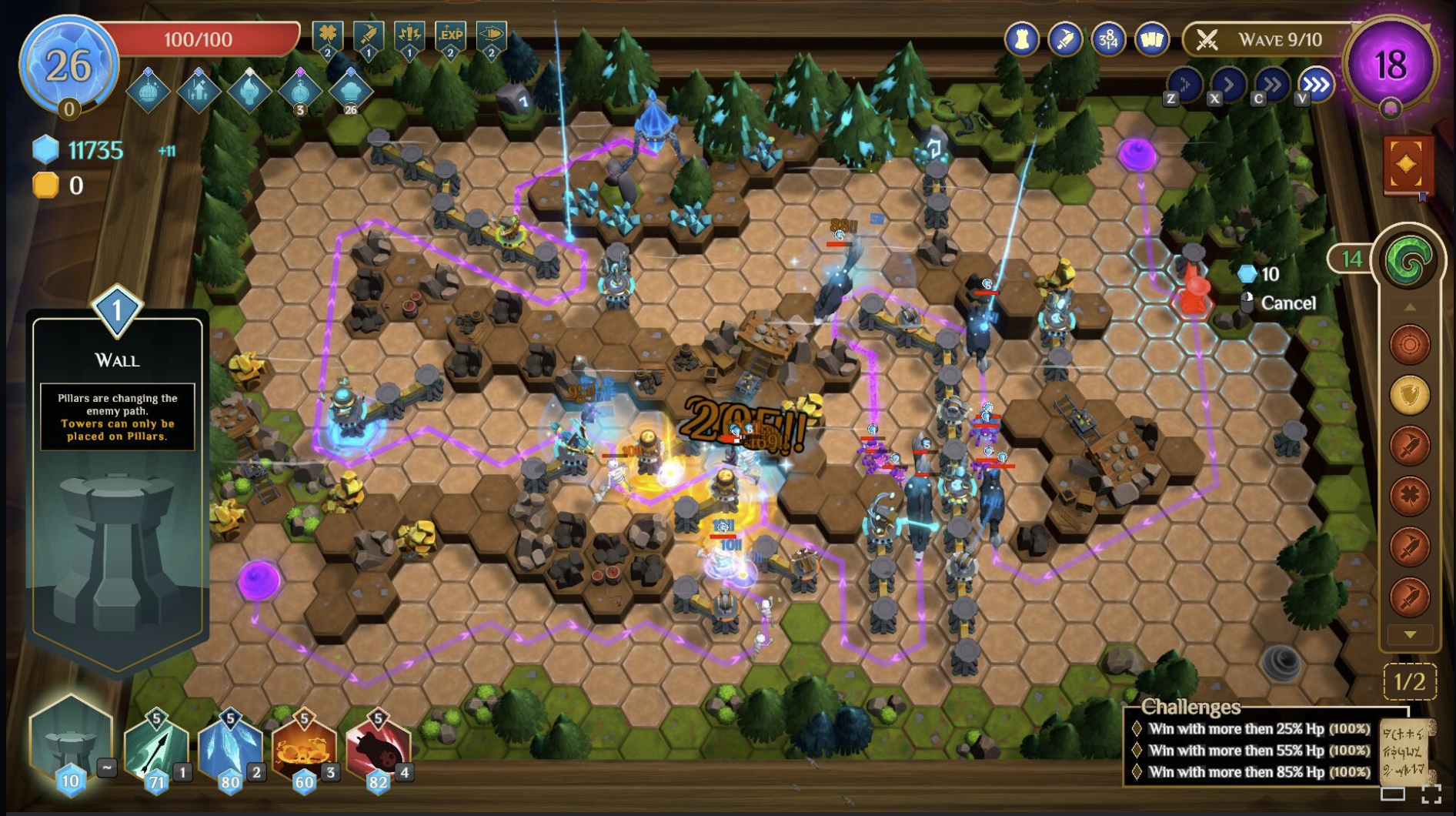
Hextalia is a hex-based strategic tower defense where you get maximum control over the board.
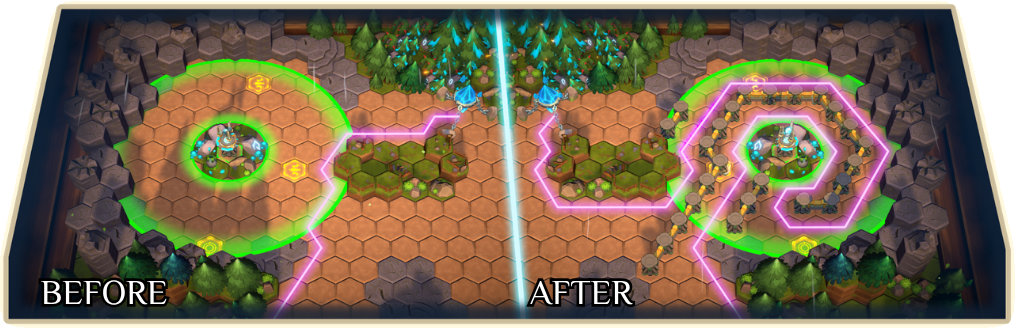
Build Pillars to reshape enemy paths, experiment with endless build combinations, and discover different levels, each comes with its own unique challenge.
The live Steam demo has already reached 1,800+ wishlists and 1,000+ unique players, with a 37-minute median playtime.
I cofounded the project while also holding the creative vision, leading all Game Design aspects from start to finish, from balancing to refining complex gameplay systems and mechanics.
My Role
Design Process
Players were spamming the same tower, upgrading it repeatedly, and never adapting to face different enemy types.
Players avoided picking new towers on later waves, since upgrading them from scratch would take too long: they'd rather keep upgrading a tower they already had than fall behind by starting fresh.
Augments that scaled with tower count were getting out of hand, so they had to be limited by design rather than left to player choice.
Tower prices now rise each time you place one, making a fresh, cheaper tower type desirable again instead of endlessly stacking upgrades on a favorite. This also naturally caps how many towers of one type a player ends up with, keeping Augments that scale with tower count in check without hardcoding a limit.
An Ammo system, where each tower had a limited placement count that only grew through upgrades or a new copy of that tower. It solved the spam problem, but players felt like the game was dictating how they were allowed to play.
Players would grab a Rune and slot it onto whichever tower was already their "best" pick, since adapting their layout for a single Rune rarely felt worth it.
In a lot of cases, players would get stuck with a Rune they had no use for.
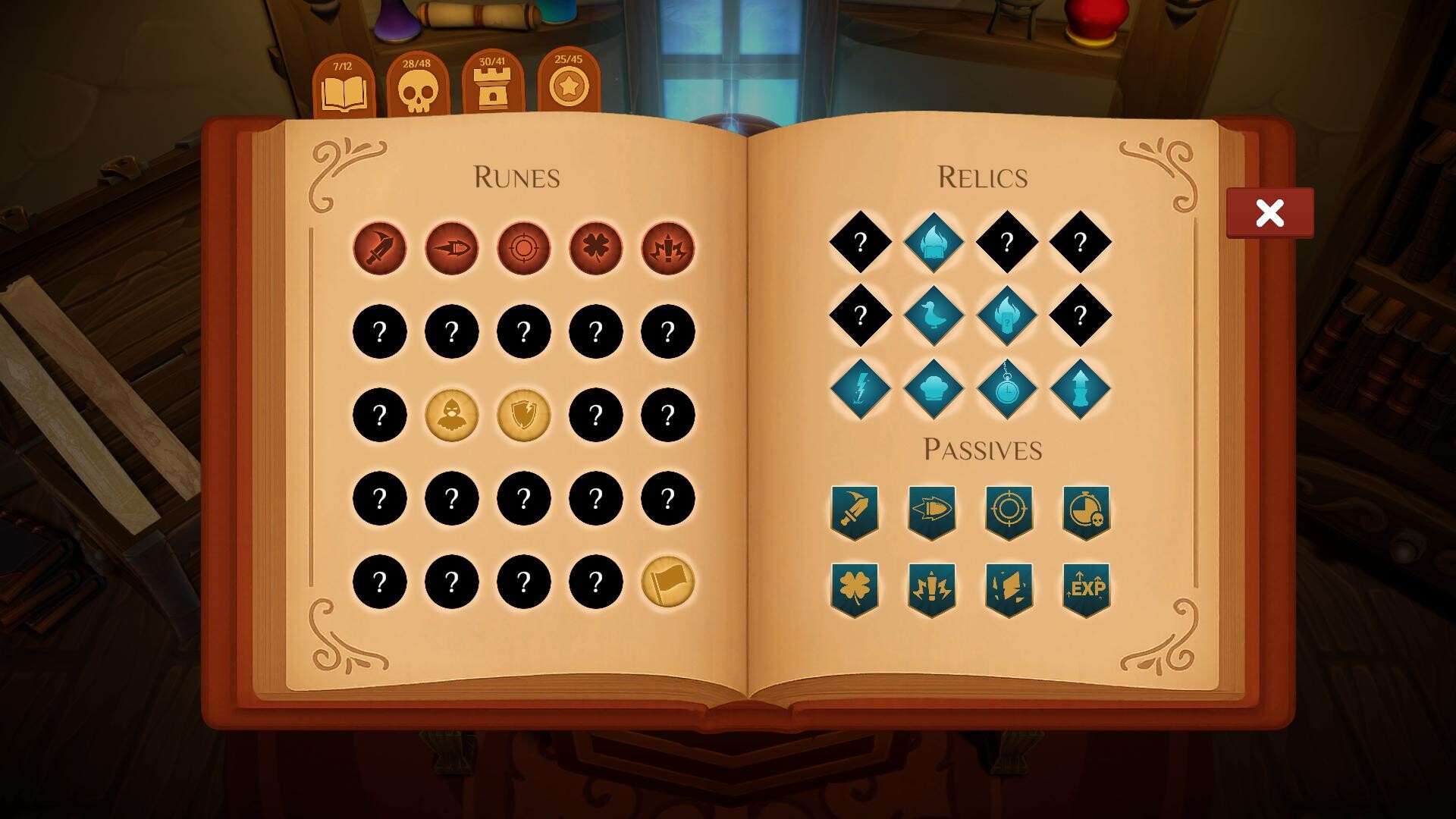
Runes are now Forgeable: every Basic Rune can be combined with another to create their own Forged Rune, letting players make deliberate choices based on the resources they actually have.
A Rune Reroll, letting players re-roll a Rune they had no use for. It felt bland and purely luck-dependent, giving players a roulette instead of an actual choice.
Traditional difficulty scaling (raising enemy Stats) felt off in a strategic, semi-automated tower defense, since the game either felt too easy or suddenly unfair.
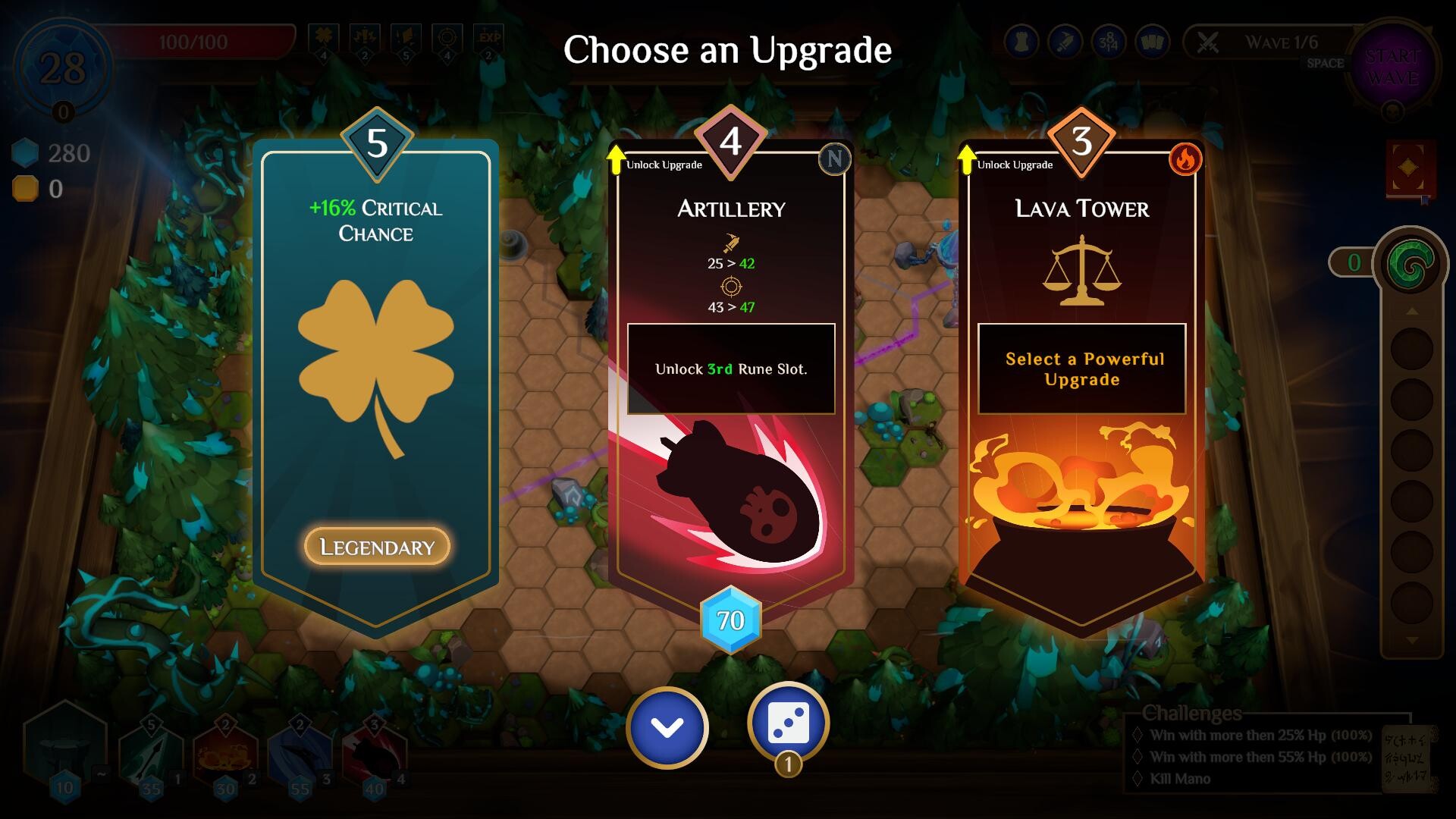
Introduced Challenges: enemies don't get extra base stats, but accepting a Challenge raises the difficulty and rewards the player with extra Skill Tree points.
At a Glance